
Author: Marcus Oyelaran

  • Agents at the office door

    Agents at the office door

    Enterprise software vendors spent 2025 shipping autonomous agents — systems that take an instruction, decompose it into steps, and execute those steps against live business systems without a human in each loop.

    Their customers spent 2025 building approval queues to put the humans back.

    This is not resistance in the usual sense. The companies installing the queues are the same ones that bought the agents, often enthusiastically, and they are not trying to slow adoption. They are trying to answer a question the software does not answer for them: when an agent takes an action that turns out to be wrong, who is accountable, and what evidence exists that the action was authorised?

    In regulated industries the question has a formal answer and the answer requires a record. A pharmaceutical company cannot let a procurement agent issue a purchase order against a validated system without an audit trail that satisfies its own quality organisation. The trail is the queue.

    Vendors have begun shipping the audit infrastructure as a feature, which is the correct response and an implicit concession. The initial pitch was that agents would remove steps. The current pitch is that agents will execute steps faster while a governance layer records them — a smaller claim, and a considerably more sellable one.

    Deployment data from three large systems integrators suggests the practical ceiling on autonomy is not technical. Agents are permitted to act unsupervised in roughly the categories where a junior employee would be: reversible, bounded in cost, and unlikely to touch a regulator’s field of view.
  • The transformer shortage, in pictures

    The transformer shortage, in pictures

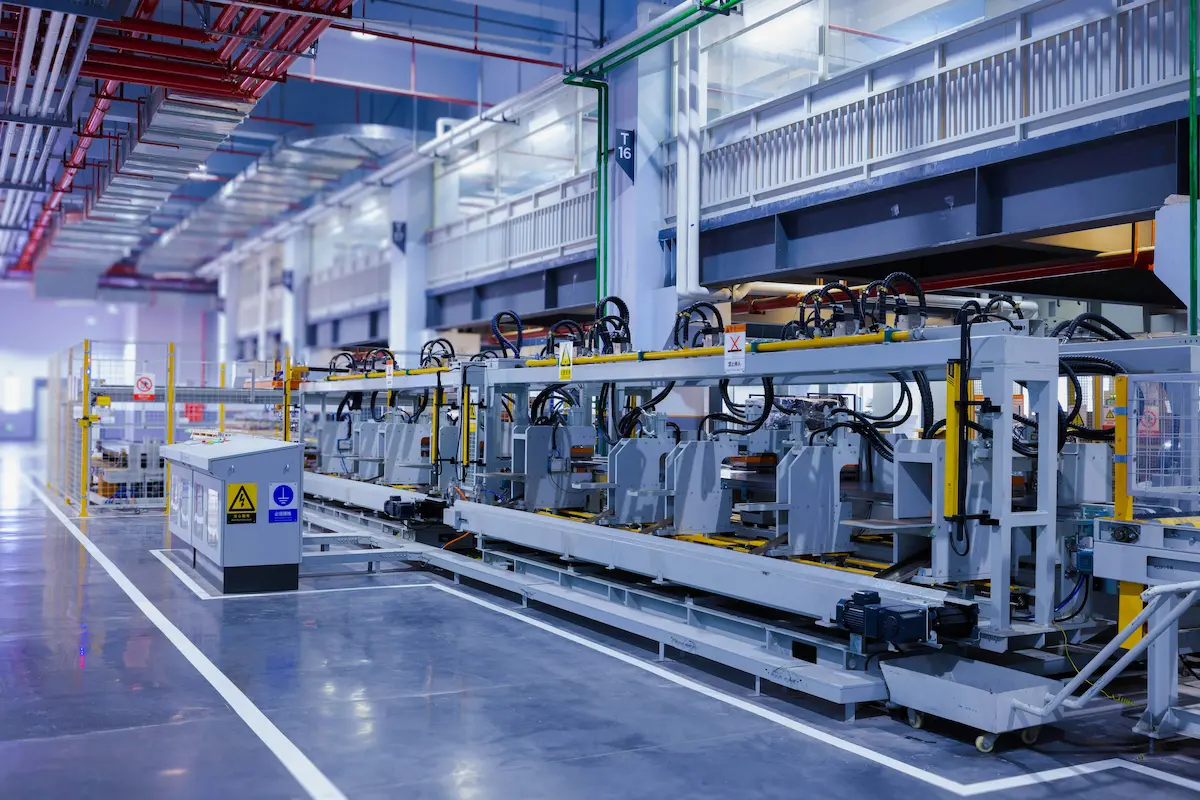
    There are four factories in North America still building large power transformers at scale. Between them they produce fewer units in a year than the continent’s utilities ordered in the first quarter.

    A large power transformer is not a commodity. Each is designed for a specific site, wound to a specific voltage ratio, and tested against a specific set of fault conditions. The copper alone can run to forty tonnes. Once built, the unit is too heavy for most bridges and must be routed by a survey team before it ships.

    These nine photographs were taken over three visits between February and June. They show the winding floor, the vacuum-drying ovens, the test bay where a finished unit is subjected to voltages it will never see in service, and the loading dock where a completed transformer waits for a road permit.

    The lead time on a unit ordered today is between three and four years. In 2019 it was eighteen months.

    Photographs by Sela Amari for Meridian.

  • The museum that collects software

    The museum that collects software

    Preserving a Rembrandt requires controlled humidity, controlled light and a conservator. Preserving a 1994 CD-ROM requires all of that plus a working drive, a compatible operating system, a machine that will boot it, and someone who remembers what the software was supposed to do.

    The Computer History Museum’s software collection runs to roughly 300,000 titles. Fewer than four per cent have been verified as running in an emulated environment.

    The technical obstacles are surmountable and largely solved in principle. Disk images can be captured. Emulators exist for most historically significant platforms. The harder problem is that software is not a document. It is a behaviour, and a behaviour requires an environment — an operating system version, a display mode, a peripheral, sometimes a network service that was decommissioned in 2003.

    Copyright makes the rest of it worse. Most commercially released software from the period remains under copyright, frequently held by entities that no longer exist in any traceable form. The Copyright Office has granted a narrow exemption for preservation, renewed every three years, which permits institutions to circumvent protection for archival purposes but not to make the results available remotely.

    The practical consequence is that a researcher must travel to the collection to use it, which for a category of object that exists as pure information is close to absurd.

    The people doing this work are aware that they are racing hardware. Optical media from the mid-nineties has a documented failure rate rising sharply past thirty years. The drives that read it are no longer manufactured.